|
 |
| Visitor Attractions in Naas Town and
County Kildare |
|
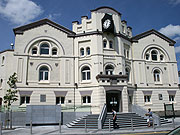
NAAS TOWN HALL
The
Town Hall was originally built as a Jail in 1796 by
the old Naas Corporation. That was abolished in 1840.
The jail building lay empty and was acquired by their
successors, the Naas Town Commission in 1854 as their
new Municipal building. In 1900 the new Urban District
Council took over the running of the town. In 1904 they
renovated the Town Hall, and gave it the new facade
including the twin-faced clock, that we know to this
present day.
|
|
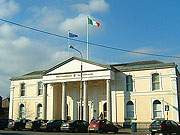
NAAS COURTHOUSE
Naas
Courthouse was constructed in 1807 to a design by Architect
Richard Morrisson, It was extended in 1860 when the
four columned portico was positioned as it is today.
The Naas Courthouse was the original meeting place of
The Poor Law Guardians who held their monthly meetings
there, as did their successors Kildare County Council,
from 1899 until the building was badly damaged by fire
in the 1950s, which caused them to move to St Mary's.
The Criminal Courtroom was the setting for many films,
due to its remarkable resemblance to the Old Bailey
in London.
|
|
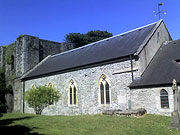
ST. DAVIDS CHURCH NAAS
St
David's Church was built on the site of an earlier Irish
Celtic Church dedicated to the local St Corban or St
Patrick. The Norman Barons who settled in the Naas area
rebuilt the church and dedicated it to St David, the
Patron Saint of Wales. The first historical reference
to St David's occurs in 1212 when it was listed as one
of the possessions of the Hospitallers of St John of
Jerusalem. It was the parish church of Naas, well endowed
and a place of ecclesiastical importance. For the next
400 years it continued to flourish, and by 1606, when
St David's featured in the inquisition of James I, it
had grown to contain three chantries - the Holy Trinity,
St Mary, and St Catherine.
In 1767 the original church Steeple was in a ruinous
state and it was decided to pull it down. Some time
later Lord Mayo decided to replace it. But the new tower
was never completed. A plaque on the inside wall of
the tower states "I found a ruin and left a steeple,
Mayo 1783".The bell dates from 1674 and originally
hung in the old steeple. The Baptismal Font is a relic
of the early Irish Christian Church and most probably
was in use in the pre-Norman church of Saint Corban.
|
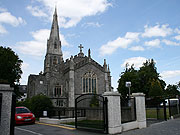
CHURCH OF OUR LADY & ST. DAVID
The
Roman Catholic Parish Church is also dedicated to Our
Lady and St David. The main body of the church dates from
1827. The 60 metre spire was added in 1858. Most recent
renovations, carried out in 1985, incorporated the directives
of the 2nd Vatican Council, by removing the high altar,
side altars, altar rails, Pulpit, and beautiful Mosaic
Floor. The new Blessed Sacrament Altar, is a circle, with
the Tabernacle as its pivotal point, denoting Christ as
the Centre of the Universe. A new church dedicated to
the Irish Martyrs was blessed and opened in Ballycane,
on the East side of the town in 1997. One of the martyrs
to whom the church is dedicated is a seventeenth century
Naas Dominican Friar Fr Peter Higgins, who was executed
in Dublin on 23 March 1642. |
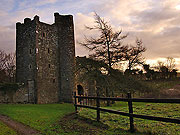
| KING JOHN'S CASTLE King John's Castle dates from
the early Norman era, perhaps as early as 1200. King John
visited Naas in 1206. He visited again in 1210, when he
held a form of Parliament in the town. About this time
Kildare became a separate County. This assembly would
appear to have been held in the newly built Naas Castle.
During the thirteenth and fourteenth centuries the
town became a Norman stronghold. In 1409 Henry IV granted
to Naas its first charter as a Corporation and a few
years later it was given power to collect tolls at all
the entrances to the town, the moneys to go towards
fortifying the town with walls and gates. King John's
Castle was rebuilt and incorporated into the town wall
structure. The vaulted rooms of the old building still
exist in the castle. There is a line of castles and
houses to the north and east of Naas, which with its
own defences, became the chief southern outpost of the
"Pale" fence, ordered by "Poyning's"
parliament in 1494.
King John's Castle is the last surviving example of
the many fortified houses in the town of Naas, It is
a large building of three stories, it comprises a tower,
with a winding stone staircase, a dungeon, a Dining
room on the ground floor, and an equally large Drawing
room on the first floor. There is a variety of large
and smaller rooms throughout the castle. An underground
tunnel leads from the castle in the direction of the
North Moat.
|
ARDKILL FARM & BOG
Visitors can experience a working farm at this attraction.
A range of farm animals are on show, and children can
meet and feed animals. A good family day out.
Tel: 0405 - 53009 |
KILTEEL CASTLE
The
village of Kilteel lies six miles north of Naas at the
foot of the Wicklow mountains. It is here that we find
Kilteel Castle. It was built in the early thirteenth century
by Maurice Fitzgerald for the Knights Hospitallers of
St. John of Jerusalem. The site upon which the castle
was built was once a monastic settlement.
There is little mention of the castle in the fifteenth
century but in the sixteenth century the lease was given
to Thomas Alen and his wife. In 1669 Col. Richard Talbot,
Earl of Tyreconnell became the owner of Kilteel. He
then sold the castle to Sir William Fownes of Kilkenny.
It remained in his family until 1838 when it was sold
to the Kennedys of Johnstown-Kennedy. Today the castle
is a designated National Monument. It consists of a
tower house dated to the fifteenth century, another
projecting towerhouse with a spiral stairs and two further
rooms at the gate-way.
|
BALLITORE QUAKER MUSEUM
Located in Ballitore, a village originally established
by Quakers, this museum contains displays and artifacts
based on Quaker families that lived in Ballitore including
a wedding dress and bonnet, worn by Marian Richardson
(nee Wakefield) at Ballitore in 1853.
Dates:
June-September, Wed-Sat 12-5pm, Sun 2-6pm
Hours:
October-May, Tue-Sat 12-5pm
Tel: 0507 - 23344
|
IRISH NATIONAL STUD
Tully, Kildare, Ireland.
Tel: + 353 (0)45 521251 Fax: + 353 (0)45 522129
Email: stud@irish-national-stud.ie
Web: http://www.irish-national-stud.ie
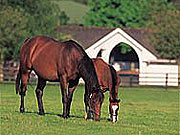
Established in 1946, the Irish National Stud combines
an active role in the development and promotion of Irish
bloodstock and is one of Ireland's major tourist attractions. |
STRAFFAN BUTTERFLY FARM
Straffan,
Co. Kildare.
Phone: +353 1 6271109
Email: info@straffanbutterflyfarm.com
Web: www.straffanbutterflyfarm.com
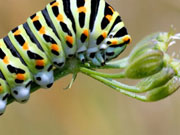
The Straffan Butterfly Farm is Ireland's first live tropical
butterfly exhibition.
The farm was opened in 1986 because of the owners interest
in butterflies and in nature generally.
Butterflies are fascinating and beautiful creatures
and the farm is an indoor all weather centre - a mini
visit to an exotic tropical environment here in Ireland.
It is an oppurtunity to see at close range some of the
worlds most exotic creatures and observe their interesting
life cycles.
There is a large exhibition area of butterfly collections
from all over the world with a special emphasis on educational
and living displays.
In the tropical butterfly house, relax among colourful
blooms and exotic planrs while butterflies fly and feed
around you.
Whatever the weather is, there's always something to
see!
|
JAPENESE GARDENS
Tully,
Kildare, Ireland
Tel: 045-521617/522963
Fax: 045-522964
Email: japanesegardens@eircom.net
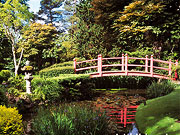
The Japanese Gardens at Tully were created between the
years 1906-1910. Devised by Colonel William Hall-Walker
(later Lord Wavertree), a wealthy Scotsman of a famous
brewery family and laid out by the Japanese Eida and his
son Minoru. The Gardens, planned to symbolise the 'Life
of Man', are now of international renown and are acclaimed
as the finest Japanese Gardens in Europe.
Located in the grounds of the Irish National Stud. |
LODGE PARK HERITAGE CENTRE
Straffan, County Kildare.
Tel: 01 - 6273155
Located outside Straffan village, Lodge Park is a Palladian
House built in 1773. There are two attractions at this
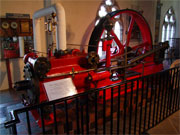
location - the Straffan Steam Museum and The Walled Garden.
The Steam Museum tells the story of steam power, and has
working steam engines and related displays.
The Walled Garden is of 18th Century origin and is
divided into different sections including a roserie
which is at its best in June & July.
Other features include a tea room and gift shop.
|
|